Live Edge Maple and Epoxy Table

Turn a slice of raw wood into a durable coffee table! This guide follows my process for finishing a cross-cut maple “cookie” slab with epoxy resin and attaching hairpin legs.

This live-edge piece of wood had some holes on top that I wanted to fill, and something had to be done to hold the bark on. So I decided to use bartop epoxy resin to finish the whole piece.

Epoxy resin doesn’t stand up to high heat, so use coasters for coffee and cocoa and never put a hot pan or dish directly on the table.

This slab of maple came from my parents’ property in Connecticut. I was told the spalting (pigmented ring patterns caused by fungi) made this wood very desirable.

Before beginning the transformation from slice to table, this cookie dried out in my parents’ barn for about two years.

Supplies

The supplies used for this project include, but are not limited to:

This project is very messy and uses materials capable of causing permanent property damage and bodily harm. Follow all the manufacturer’s instructions and safety warnings.

(more…)

T-Shirt Refashion

Take a unisex tee from boxy to foxy! I have a bunch of great logo tee-shirts but they’re cut for men and I don’t like the way they fit, so today I’m going to show you how to mod your t-shirts into a flattering shape that you’ll actually wear, using a serger.

Supplies and tools:

Read on for the complete tutorial.

(more…)

Hacking the Brother KH-930e knitting machine

Limor “Ladyada” Fried and I just finished up an extensive tutorial on hacking the Brother KH-930e knitting machine. We show you how to make your own cable for interfacing with the machine, then how to use it to put custom patterns on the machine without entering them by hand, as I had been doing previously (one excruciating pixel at a time). I made the above tessellating adafruits fabric and the dithering experiment below.

Have questions? Don’t ask them here or send me email, ask in the adafruit forum.

(more…)

Sock Zombies!

A while back for my birthday, Sarah Hatton made me a “sock zombie” plush toy from whatever she had laying around… a tube sock, some red thread, sewing machine bobbins, and some eyeshadow. I made it into a tutorial video for CRAFT’s Halloween series.

Filmed less than a week after my invasive knee surgery (pics), here’s a behind-the-scenes pic by Brian Redbeard.

Firefox Necklace

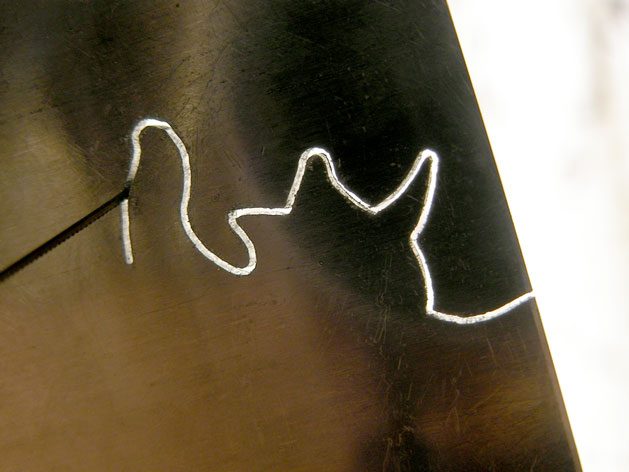
My favorite browser, in 18ga. Sterling silver, video for CRAFT. To get the foxy template, check out Tobi Leingruber’s Foxbling on Thingiverse

I used rubber cement to affix the template to a piece of 18ga. silver sheet, and used a small saw to cut out the shape on top of a jewelry maker’s bench pin, which is that fork-shaped wooden surface you see in the video. Finish it up with files and a lot of sanding using a flex shaft and slotted mandrel. The same flex shaft can be fitted with any number of tools, like the tiny drill bit I used to drill the pendant’s jumpring hole. I got most of the tools and supplies for this project from Rio Grande, who also buys back my scrap metal.


If you like this post, you may be interested in some of my others:

Thanks for following along! To keep up with what I’m working on, follow me on YouTubeInstagramTwitterPinterest, and subscribe to my newsletter.

Hydroponic Herb Garden

I set up a hydroponic herb garden for my latest CRAFT Video, and had blast doing so. It’s fun and just my kind of geeky to maintain the proper pH and nutrient levels, all the while nomming delicious home-grown herbs. I had a bit of a scare with my arugula at first (it went into shock from the transplanting), but it’s all good now. Lots of pictures are on my Flickr, and don’t forget to go check out the video and the herb risotto recipe I made to go along with it.

Hydroponic gardening uses water more efficiently than traditional soil gardening, and is also a lot less messy for urban apartment dwellers. Itโ€™s easier to get set up than you might think! The basic idea is that you have a reservoir of water with all the nutrients the plants could want, being circulated close to the roots of the plants. Because the water is recirculated, the plants have more than one chance to grab the nutrients in the water, so they grow faster.

(more…)

LED Frog & Fireflies Embroidery

This picture of a frog catching fireflies is embellished with lights that bring the bugs to life. Conductive thread is the magic ingredient, bridging the gap between rigid metal and soft floss. To make a stitched scene light up, combine traditional embroidery techniques with a few common electronics components. The possibilities are endless, and the result is an artful conversation piece.  This was written as a tutorial for my LED Sewing Kit, where you can include LEDs into an embroidered picture or into a garment of your choice.

Materials and Tools

Supplies & Tools
(more…)

LilyPad Arduino Blinking Bike Bag Patch Tutorial

I added these blinking lights to my fatlab patch for riding my bike at night. Here I’ll show you how to add flashing LEDs to your backpack for fun and safety. I used a LilyPad Arduino with a rechargeable lithium-polymer battery for flatness and re-usability. The LEDs blink in a marquee pattern, two at a time, in patriotic red, white and blue.

Materials and Tools:
-scissors
-needlenose pliers
-sewing needle
-LilyPad Arduino with programmer and USB cable – Maker Shed

Power:
-LiPower board – Sparkfun
-lithium-polymer battery (and charger) – Sparkfun
OR
-LilyPad AAA battery holder (comes with the Maker Shed kit linked above)

-conductive thread – Lame Lifesaver
-conductive velcro – Less EMF
-sticky-back velcro (I got mine at Michael’s)
-bag or backpack
-fabric patch to mount circuit
-small scrap of fabric for switch
-thread
source code and schematic

(more…)