
Appearance on Simple Electronics Podcast
I appeared on the Simple Electronics Podcast. I had a lovely time chatting with Dan!
I appeared on the Simple Electronics Podcast. I had a lovely time chatting with Dan!
Learn how to read and work with code libraries – the Arduino community’s biggest superpower. Becky Stern explains how to use libraries of pre-written Arduino code to control LEDs, write to displays, create sounds, and more, including editing that code to create your own programs.
Full article on DigiKey’s Maker.io – Arduino Code Libraries
Becky Stern shows you how to use digital and analog inputs when building Arduino circuits, including controlling LEDs using pushbuttons and potentiometers.
Full article on DigiKey’s Maker.io – Arduino Input/Output
This mini iron is perfect for anyone who solders (or would like to). Don’t worry whether they have a soldering iron already, this portable USB-powered iron makes a great second iron for your favorite maker’s travel kit.
This magazine is produced by college women in STEM for college women in STEM.
(more…)
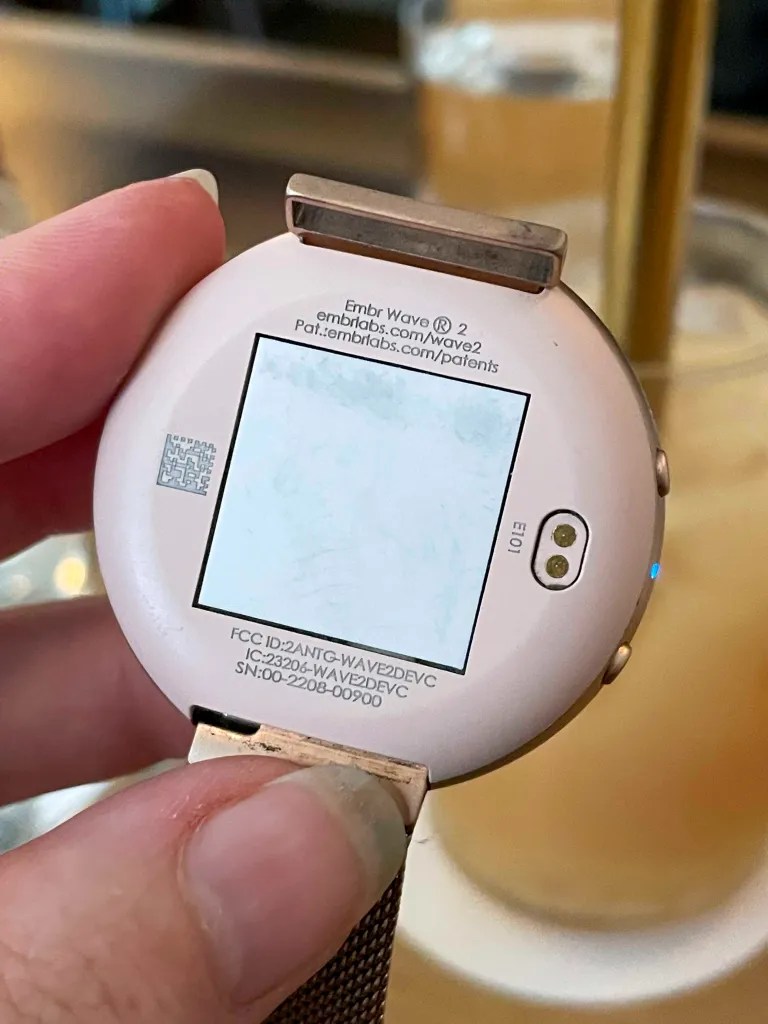

Today I’m taking a look inside the Embr Wave 2, a wristband that helps with temperature regulation. It’s the only wearable I’ve ever seen with a Peltier cooler in it. Watch the video above to see me try it out, take it apart, and analyze the design and manufacturing of the circuitry inside. Thanks to David Cranor for lending his EE expertise and to Lumafield for the 3D scan.
This teardown is sponsored by Digi-Key, where you can pick up supplies and tools for your own electronics projects. Check out this project on their maker.io site.
(more…)Learn to build simple circuits for light and sound without the need for any code or programming. Becky Stern shows you how to hook up some LEDs to a battery pack, and also a simple circuit for playing audio.
Full article on DigiKey’s Maker.io – Simple Light and Sound Circuits
Soldering is the process of bonding separate metal objects together with a low-melting-point alloy. When done properly, this creates a secure electrical connection. It’s not as hard as it may seem, and Becky Stern will show you everything you need to know. The main idea is to heat up both things being soldered and allow the solder to flow between them. When heated properly, the solder will wick to the surfaces, and the solder will look shiny and form concave shapes between components.
Full article on DigiKey’s Maker.io – How To Solder

Here’s how I made a custom replacement circuit board for a PS4 controller. I had been hanging onto a few broken controllers, hoping to turn them into something new. I thought that if I connected to all the switches, I could repurpose the controller.


Inside, there’s a circuit board that hosts the joysticks, a few switches, and the brains of the operation, but most of the buttons are wired up through a membrane keypad. The connector on the circuit board is a rectangular cutout with small pads that line up with the membrane’s contacts. So this is what makes a custom PCB necessary for this project– there just isn’t another way to connect to all those membrane keypad switches.
So I got to scheming a breakout board– a circuit that would have the required membrane interface, but then wire it to headers I can wire out to the rest of my circuit. I started by drawing a circuit diagram with the joysticks and the 19 membrane contacts each connected to its own header pin.
This project is sponsored by Digi-Key, where you can pick up supplies and tools for your own custom electronics. Check out this project on their maker.io site.
(more…)This is a tour of my compact New York City studio, which I use for my work as a full-time content creator. I’ll show you how my small space pulls off some big tasks, share with you some of my favorite storage and organization tips, and answer your frequently asked questions about my workshop.
My studio is the biggest bedroom in my Brooklyn apartment– it’s about 200 square feet of space, and it has one closet, laminate floors, central air, and a small but useable space outside one of the two windows.
You can get tools and supplies for your own dream workshop at Digi-Key, the sponsor of my workshop tour video. Check out all my favorites on Maker.io.
To keep up with what I’m working on, follow me on YouTube, Instagram, Twitter, Pinterest, and subscribe to my newsletter. As an Amazon Associate I earn from qualifying purchases you make using my affiliate links.

We’ll start with my tool chest. It holds way more stuff than shelves or a pegboard while making everything easy to reach for a short person, and provides an additional work surface. I keep my 3D printer on top of it and use the space next to it for whatever I’m working on. For a space with floors that aren’t necessarily level, it was important to me to get a tool chest with drawers that latch shut and casters with locks, so nothing goes sliding around. The color is a bonus for me– it matches the rest of the space and I can draw on it with dry erase makers. I like that everything can have a place in these drawers and be out of sight when not in use.
(more…)Here’s an easy method for etching metal with electricity. I wanted to make some brass plaques to commemorate my brother, who passed away recently. Other methods use toxic etchant chemicals, but this method uses salt water. Both methods have pros and cons, but I prefer the electric method because it’s safer and the cleanup is more straightforward.


Thanks to Digi-Key for sponsoring this project! Check out this project on Maker.io.
I designed the artwork in Illustrator to mimic the Cafe Bustelo logo– really I only needed to make up an R and an N, since I could just trace the rest of the letters. Before you etch, you’ll need to get your artwork transferred onto the brass, masking out everything you don’t want to etch. There are a few methods for this step, as well. I first tried the toner transfer method of ironing on a laser print-out, then soaking off the paper in water, but I couldn’t get the temperature and pressure worked out well enough to successfully transfer my image. So instead I used my vinyl cutter to make a sticker of my design and stuck it to the brass.
(more…)