This is a tour of my compact New York City studio, which I use for my work as a full-time content creator. I’ll show you how my small space pulls off some big tasks, share with you some of my favorite storage and organization tips, and answer your frequently asked questions about my workshop.
My studio is the biggest bedroom in my Brooklyn apartment– it’s about 200 square feet of space, and it has one closet, laminate floors, central air, and a small but useable space outside one of the two windows.
You can get tools and supplies for your own dream workshop at Digi-Key, the sponsor of my workshop tour video. Check out all my favorites on Maker.io.
We’ll start with my tool chest. It holds way more stuff than shelves or a pegboard while making everything easy to reach for a short person, and provides an additional work surface. I keep my 3D printer on top of it and use the space next to it for whatever I’m working on. For a space with floors that aren’t necessarily level, it was important to me to get a tool chest with drawers that latch shut and casters with locks, so nothing goes sliding around. The color is a bonus for me– it matches the rest of the space and I can draw on it with dry erase makers. I like that everything can have a place in these drawers and be out of sight when not in use.
This is a bit different than my normal build video, but I’m so interested in the environmental and sociological changes Unspun’s business model has the potential to bring about. Let me know what you think. You can get 20% off Unspun jeans with code BECKY https://unspun.io/
As part of the YouTube robodubbing beta, this video has a Spanish audio track. Check it out in the Settings menu of the YouTube player.
Today I’m taking look at an innovative denim company that’s using high-tech software to reduce waste and make completely custom-fit jeans. I got to speak to Unspun co-founder Beth Esponette and try out the body scanning phone app for myself.
Here’s the way it works. You pick out your style and fabric, then record a short video to scan your body using the Unspun app.
So it takes a few weeks to get the jeans in the mail. They arrive in a recyclable mailer with instructions to wear them in for a week before evaluating the fit, and unspun will remake them for free if they don’t feel perfect. This happened to me– I don’t know if it’s because I wore tight leggings or if I was sucking in my gut for the camera, or maybe because I gained weight while my jeans were in production, but the revised jeans, fit perfectly– Better than any denim I’ve ever owned. These revisions were made based on my feedback, not a new scan. But I did end up ordering another pair with a new scan just to compare the results.
The traditional supply chain requires large minimums. Many thousands of units of a product must be made for the price of each one to feel affordable. That means only products that are predicted to sell in those quantities are manufactured. In the video above, Unspun cofounder Beth Esponette explains how their business model turns the traditional supply chain on its head.
I am admittedly a tough customer when it comes to pants, or trousers as some of you call them. I’ve been wearing overalls and coveralls for the past few years, and I’ll let you in on a little secret, it’s not just because they are workshoppy and cute. I’ve been avoiding waistbands because not only have I gained weight, so none of my pants fit me, but I was also diagnosed with PCOS, and I have occasional abdominal discomfort. But my unspun jeans fit great and are very comfortable. In addition to the waste-reduction benefits of this business model, there’s also a real improvement to the customer experience. No longer is your personal fit experience beholden to where your figure fits on a bell curve compared to everybody else, which serves the economics of the inventory model.
If you’d like to try out their tech and pick up a pair of unspuns, you can use my discount code on the screen now to get 20% off. I’m not earning affiliate income and this video is not sponsored by Unspun, but they did gift me the jeans.
This tool roll is an easy and useful sewing project that can be whipped up in an afternoon. The finished dimensions are about 28cm tall by about 65cm long when unrolled.
The Bitty is a pocket drum machine by Curious Sound Objects. I 3D printed an enclosure to help it sit flat on the table, and I encased the knobs in felt so they are soft and squishy.
I used Tinkercad to sketch out my idea, which is basically a box the same shape as the Bitty, with openings for the switches and knobs. It’s flat on the front to print with that side to the build plate. I punched out the Curious Sound Objects logo from the speaker area. You can grab the file on Tinkercad.
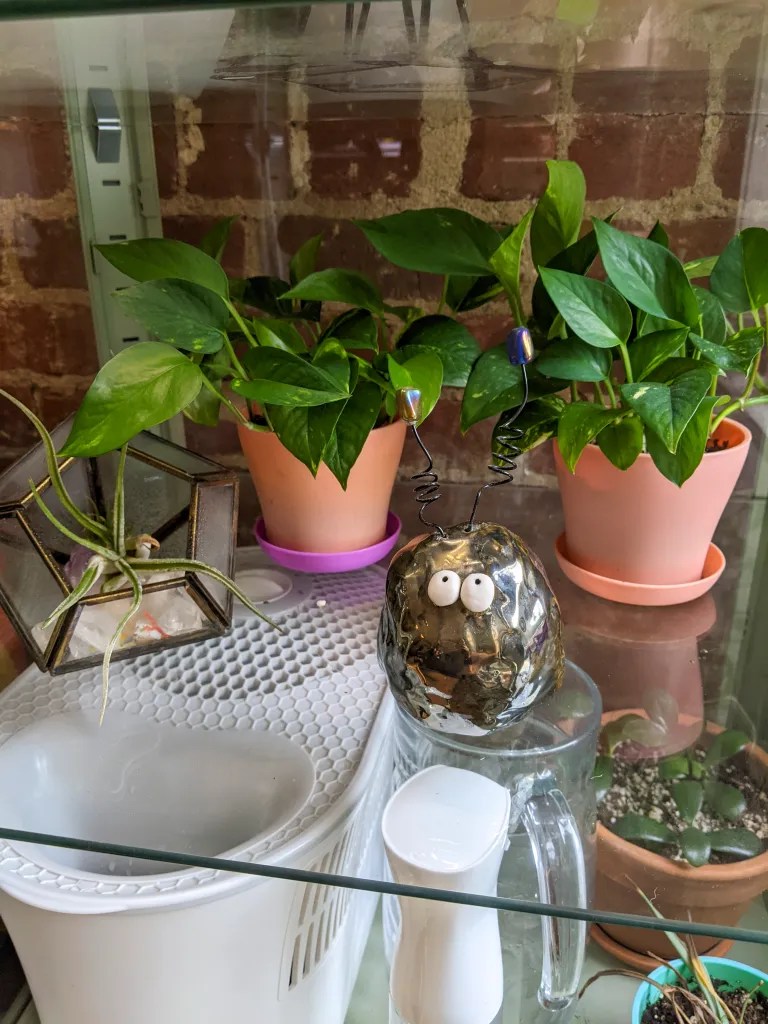
First I put together my cabinet and added some LED grow lights with a built-in timer, and a humidifier in the bottom. The whole point is to keep my rain forest plants happy, which like things warmer and more humid than the normal conditions in my apartment.
Here’s an easy beginner embroidery project that celebrates your favorite constellation. Follow along to see how I made this classic constellation and also this glowing version made with LEDs and conductive thread.
Here’s a birthday present I made for my friend and fellow YouTuber Estefannie. It’s an embroidery I designed with some of her favorite things, as well as some electronics to play sound and light up the birthday candles.
Last year Estefannie and I found out our birthdays are only a day apart, so naturally, we decided to do a youtube collab to celebrate and make each other gifts. I knew Estefannie moved into a house not too long ago, so I decided to make something to help decorate all that new wall space. Embroidery is a natural choice for me, but this time I used a computerized embroidery machine instead of doing it by hand.
I embedded a handmade ornament inside made from sheet metal. The little dumpster fire is revealed as the candle burns. I was inspired by PyroPet candles.
I had the idea that I should be able to 3D print a mold for liquid wax to make this candle. See, the melting temperature of the wax (~60 degrees C) is way lower than that of the PLA filament (~185 degrees C). I had made soy wax candles in the past, so I pulled out my candle making supplies and did some research online.
Soy wax is much too soft to use for casting– it won’t pick up fine details or hold its shape after demolding. My research suggested beeswax and paraffin are more suited to molding into freestanding pillar candles, but that beeswax is notoriously sticky, making it more difficult to remove from molds. So I chose to start my experiments with paraffin wax.